Aged Care Act: 100 days in – sector insights
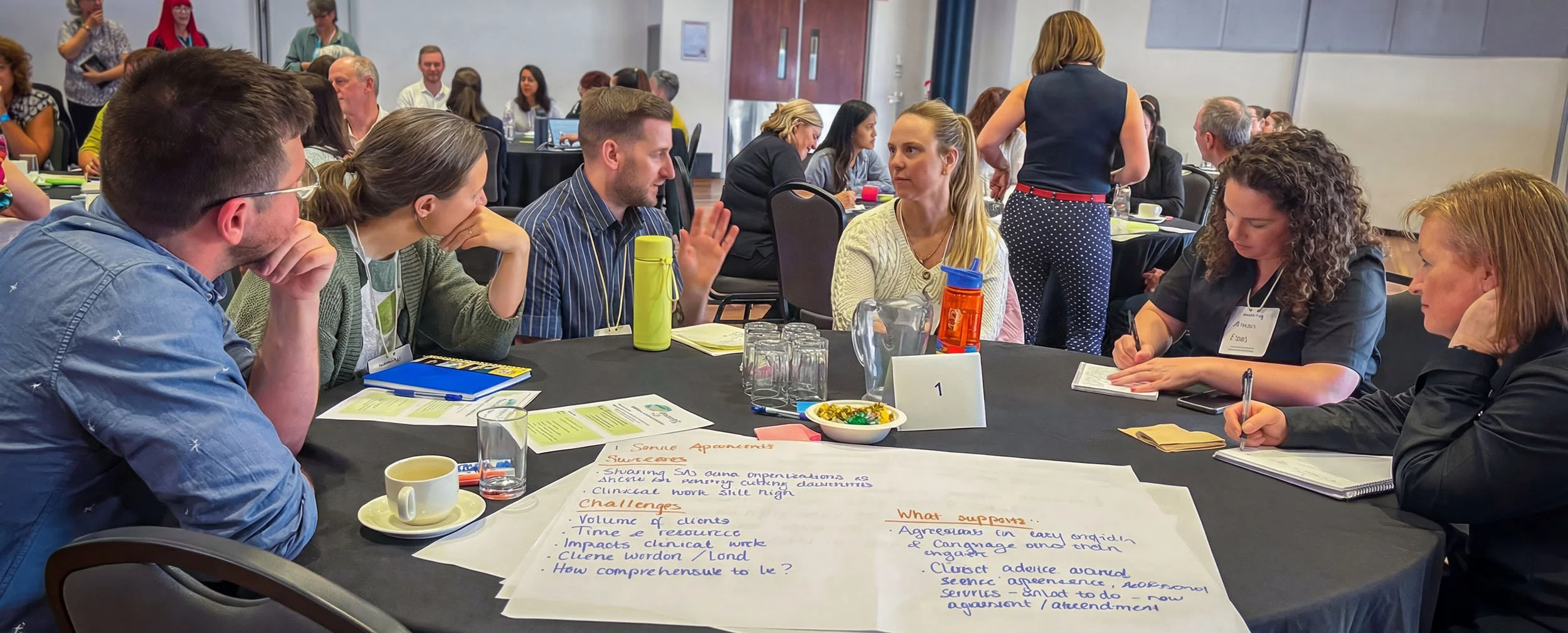
Sixty people from thirty CHSP and Support at Home-funded organisations came together for 100 days in: Putting the new Aged Care Act into practice – a forum marking 100 days since the Aged Care Reforms took effect on 1 November 2025.
It was a chance to step back from the day-to-day, celebrate progress, and share what's working, what's been challenging and what people have learned along the way.
Below is a summary of the key themes that emerged from the roundtable discussions.
1. Client contributions and financial hardship provisions
Participants shared strong concerns about the impact of Support at Home fees, particularly for people transitioning from CHSP, where services are often cheaper. Reported impacts included:
- older people declining and rationing services due to cost
- older people declining to transition to Support at Home as it's cheaper to stay with CHSP
- workforce pressures and flow-on impacts to service delivery
- concerns about provider financial viability
- the potential loss of CHSP's established approach to fee management, including reductions and waivers
- distressing reports of clients threatening self-harm
- increased pressure on other parts of the system (including hospital admissions)
- questions about whether people who receive rental assistance should be excluded from applying for hardship provisions, with fees automatically waived or reduced
- hardship processes are inconsistent, overly complex, and may require backpay – disproportionately affecting people experiencing disadvantage.
What participants want
- clearer guidance on managing the transition from CHSP to Support at Home
- practical strategies to support clients through the transition
- a consistent and less onerous approach to fees across all programs.
2. Care and service plans
Many organisations are still working out how to streamline care and service plans so they're useful without being too onerous. Participants noted:
- the additional workload is significant
- assessments often don't include enough detail to inform service delivery (especially for allied health)
- strong positive feedback about the SSD Connect Alliance My Care and Services Guide and Plain English Template
- interest in a more streamlined, interactive care plan format within My Aged Care for shared visibility.
3. Registered supporters
This area is still being implemented in many services and hasn't been a priority amid competing reform tasks. Issues raised included:
- lack of notifications in My Aged Care when changes are made, resulting in a need to manually cross-check
- the need for more education, practical support and case studies.
4. Allied health
Allied health came through as a consistent pain point, with impacts on interdisciplinary care and timely service delivery. Participants noted:
- preference for higher-level allied health codes to support interdisciplinary care
- internal referrals disrupted due to needing additional codes
- additional code processes are cumbersome and time-consuming
- inability to add to an assessment request once started
- slow response times for support plan reviews, leaving older people waiting and allied health providers holding clinical risk or having to cease the service
- nursing codes have been relatively efficient in comparison
- recruitment and retention are difficult in this changing landscape.
What participants want
- advocacy for a more responsive system
- clarity about the future direction of CHSP allied health.
5. Complaints, feedback and whistleblowers
Many organisations are spending more time managing complaints linked to system issues during the reforms. Participants raised:
- increased complaint volumes (including about Support at Home and allocation of funds)
- uncertainty about who manages whistleblower matters and how to integrate this into existing processes
- still trying to develop policies and governance arrangements that support the multiple legislative requirements
- challenges educating staff on requirements and pathways
- difficulty meeting the 30-day whistleblower notification requirement
- confusion about which pathway applies (SIRS, elder abuse, whistleblowing, and so on)
- implementing a process to regularly review trends.
What participants want
- clearer advice on pathways and governance expectations
- practical guidance on meeting the 30-day requirement.
6. Implementing the Statement of Rights
Participants reported that the Statement of Rights is being provided more consistently, but organisations are still working out:
- how to embed it in practice
- how to demonstrate implementation and evidence this effectively, particularly as part of the re-registration process for organisations registered in categories 1–3
- ongoing staff education needs.
7. Responsible persons
For some organisations – especially where aged care isn't core business – there are challenges in governance oversight and capability. Themes included:
- frequency and format of reporting to governing bodies
- briefing councillors and senior decision makers
- supporting responsible persons to understand their role and how the organisation meets the Act
- desire for standardised Department documents (for example, a Responsible Persons checklist).
8. Associated providers
Associated provider arrangements are proving complex and resource-intensive. Participants raised:
- balancing client choice with suitable provider availability
- administrative time and compliance burden (agreements, auditing, training expectations)
- privacy issues around sharing and storage of workforce information
- complexities meeting home modifications and Australian Standards under associated provider arrangements
- efficiency, consistency, data management and resourcing challenges at scale.
What participants want
- a shared client portal so notes can be seen by all providers working with the older person
- efficient notifications when clients move from CHSP to Support at Home
- clearer information about self-managed processes
- advice on mandatory training
- a central repository of compliant providers
- a standard agreement template.
9. DEX reporting
DEX reporting continues to create pressure, with challenges including:
- accessing and navigating the portal
- data entry aligning with the reporting period
- maintaining data quality
- training teams to record information correctly
- concern that extra reporting requirements will become more onerous
- how to report volunteer input.
10. Streamlining processes in My Aged Care
My Aged Care process and platform issues remain a major frustration. Common themes included:
- confusing language on the summary page
- long wait times for customer service
- inconsistent responses from My Aged Care
- consistent errors on the portal
- navigation and location of documents
- client-facing portal is difficult for older people to find accurate information about providers
- providers receiving multiple referrals that are not compatible with the services they deliver (for example, out of area, not First Nations people, services not delivered by provider)
- increased time spent vetting and redirecting referrals that are not relevant
- more time spent supporting frustrated older people due to challenging navigation
- good technical support when reached.
11. Assistive technology and home modifications
Participants reported older people can end up "between" systems, with challenges such as:
- Support at Home providers not accepting older people with assistive technology and home modifications (AT-HM) codes as too costly to support
- allocation of 60% Support at Home funding does not adequately fund the AT-HM costs
- older people not wanting to provide information to Services Australia and declining services
- getting AT-HM codes and using them when there is no care partner, especially when the person is also referred to or engaged in CHSP allied health.
12. Communicating with older people
There's a clear appetite for simpler, consistent communication:
- simplified documents
- shared key messages to use across providers.
13. Implementing CHSP service agreements
Service agreements are still taking up too much clinical time to implement, with most organisations still working out how to do this efficiently. Participants noted:
- high client volumes taking up precious time and resources
- needing to use a mix of approaches (hard copy, electronic, posting)
- agreements need to be easier to understand and more concise
- templates need to be available in languages other than English
- clearer advice is needed on managing additional services – do organisations create a new agreement or amend the existing one?
- clearer advice on what must be included
- interest in agreements integrated into a CMS.
What's next
The first 100 days have surfaced both progress and pressure points. What came through strongly is the sector's commitment to making the reforms work – and the need for clearer guidance, streamlined processes and practical tools to support older people and the workforce.
If you attended the forum, thank you for contributing your experiences and insights. We'll continue to use what we heard to guide our training, resources and advocacy across the CHSP and Support at Home-funded aged care sector.
Visit our Reforms Hub and Good Practice Hub for practical templates, guidance and resources to support you and your team's work.