
Victorian providers heard at Senate inquiry into Support at Home
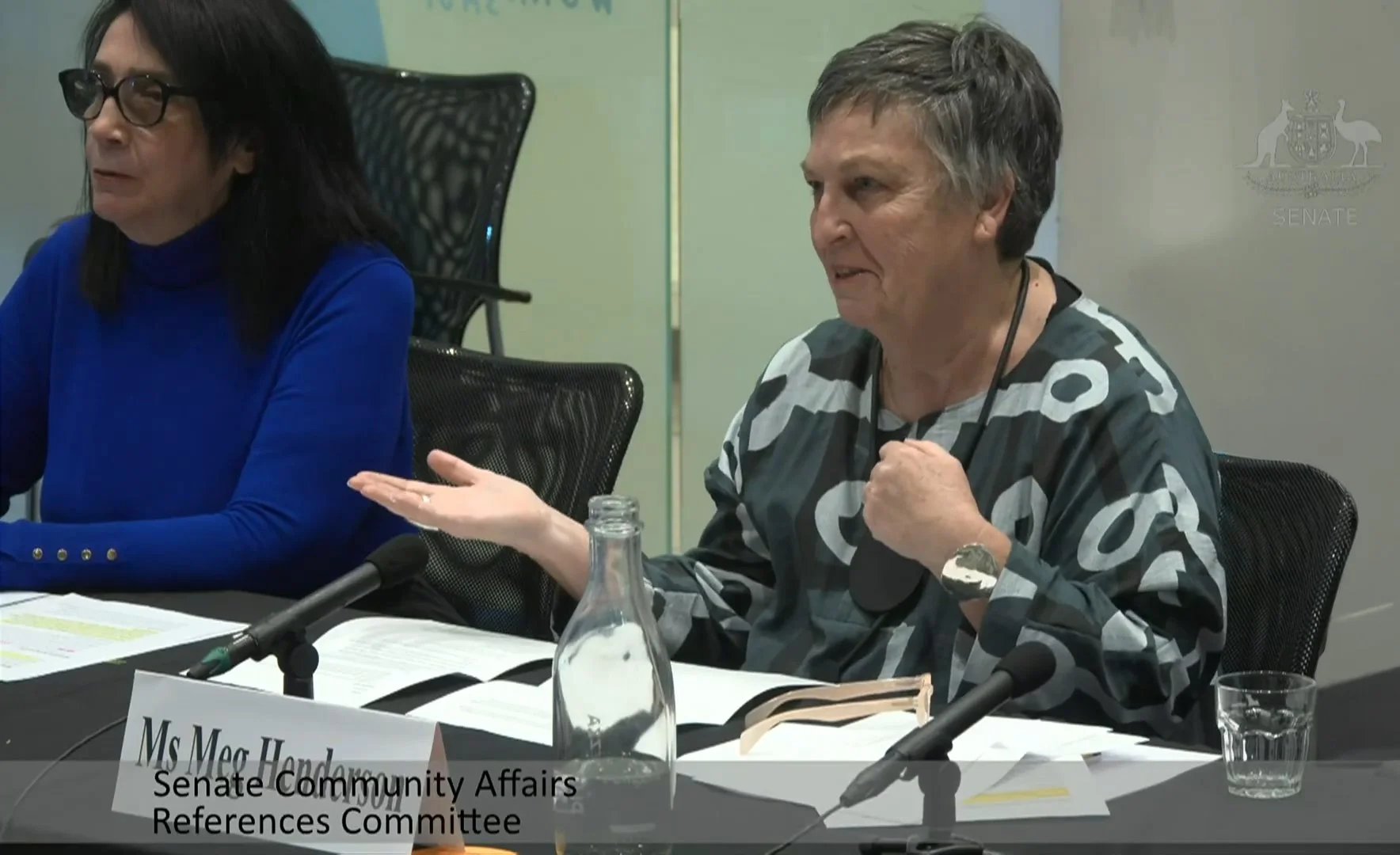
Meg Henderson and Anna Makedonskaya speak at the Senate Community Affairs References Committee
hearing in Melbourne.
The experiences, concerns and recommendations of Victorian aged care providers have gone directly to the Senate inquiry into the Support at Home Program.
In partnership with four other sector support and development funded programs, the SSD Connect Alliance submitted two papers to the inquiry.
The first was developed with Aboriginal Community Controlled Organisations across Victoria. The second represented Victorian mainstream aged care providers.
Both papers drew on consultation with providers. Both set out the practical issues providers face as they deliver aged care services under the Support at Home Program.
Taking provider experiences directly to the Senate
After the submissions, representatives of the Victorian sector support and development partnership were invited to appear before the Senate Community Affairs References Committee.
Meg Henderson from the SSD Connect Alliance and Anna Makedonskaya from the Eastern Sector Development Team presented the submissions at the committee's public hearing in Melbourne on 3 August 2026.
The invitation was an important chance to take provider feedback beyond the written papers. The committee heard first-hand how the program affects aged care providers, their workers and the older people they support.
Victorian providers were not only consulted. Their experiences and recommendations went straight to the Senate committee.
Representing Aboriginal community-controlled organisations
Meg presented the submission developed with Aboriginal Community Controlled Organisations across Victoria.
The submission raised concerns that the Support at Home Program remains largely mainstream in its design. It does not adequately reflect Aboriginal ways of caring, community-controlled service delivery or commitments in the Aboriginal and Torres Strait Islander Aged Care Framework.
Meg spoke about the extensive work Aboriginal organisations do to help Elders navigate the aged care system. This includes coordination of services, follow-up on assessments, advocacy for families and the work to fill service gaps.
Much of this essential work is not recognised or funded under a transactional service model.
What the submission called for
- Hold Support at Home accountable to the Aboriginal and Torres Strait Islander Aged Care Framework
- Strengthen Aboriginal shared decision-making
- Establish Aboriginal-led navigation and assessment pathways
- Put flexible community-controlled funding in place
- Remove financial barriers for Elders
- Support the growth and sustainability of Aboriginal community-controlled aged care providers
Representing mainstream providers
Anna presented the submission representing Victorian mainstream aged care providers.
She spoke about the gap providers see between the intent of the Support at Home reforms and the reality of service delivery.
The submission highlighted the growing administrative burden on providers. This includes complex client onboarding, service agreements, claims processes and the provider requirements that come with them.
Providers also reported challenges with software systems, manual workarounds and service approval processes. These issues take staff away from direct care. They make it harder to respond quickly when an older person's needs change.
Anna emphasised the need for systems that value provider experience and professional judgement, so organisations can focus their time and resources on older people.
A collective Victorian voice
The hearing was an important milestone in a statewide advocacy process.
Providers contributed their knowledge, shared what was happening in their services and identified practical changes to improve the Support at Home Program.
The two submissions brought those experiences together and placed them in front of the people who review the program.
Thank you to every provider and Aboriginal Community Controlled Organisation who contributed to the consultations and submission papers. You helped make sure the Senate committee heard directly from Victoria's aged care sector.
What happens next
The Senate Community Affairs References Committee will now consider the evidence from written submissions and public hearings.
The committee is scheduled to report to the Senate by 24 November 2026. Where the report recommends Australian Government action, the government is generally expected to respond within three months of the report being tabled.
The SSD Connect Alliance will keep following the inquiry and share relevant updates, including the committee's recommendations and what they may mean for providers.
Watch the hearing and read the submissions
Meg and Anna's appearance begins about 1 hour and 30 minutes into the recording.
Visit our Reforms Hub and Good Practice Hub for templates, guidance and practical resources to support you and your teams.